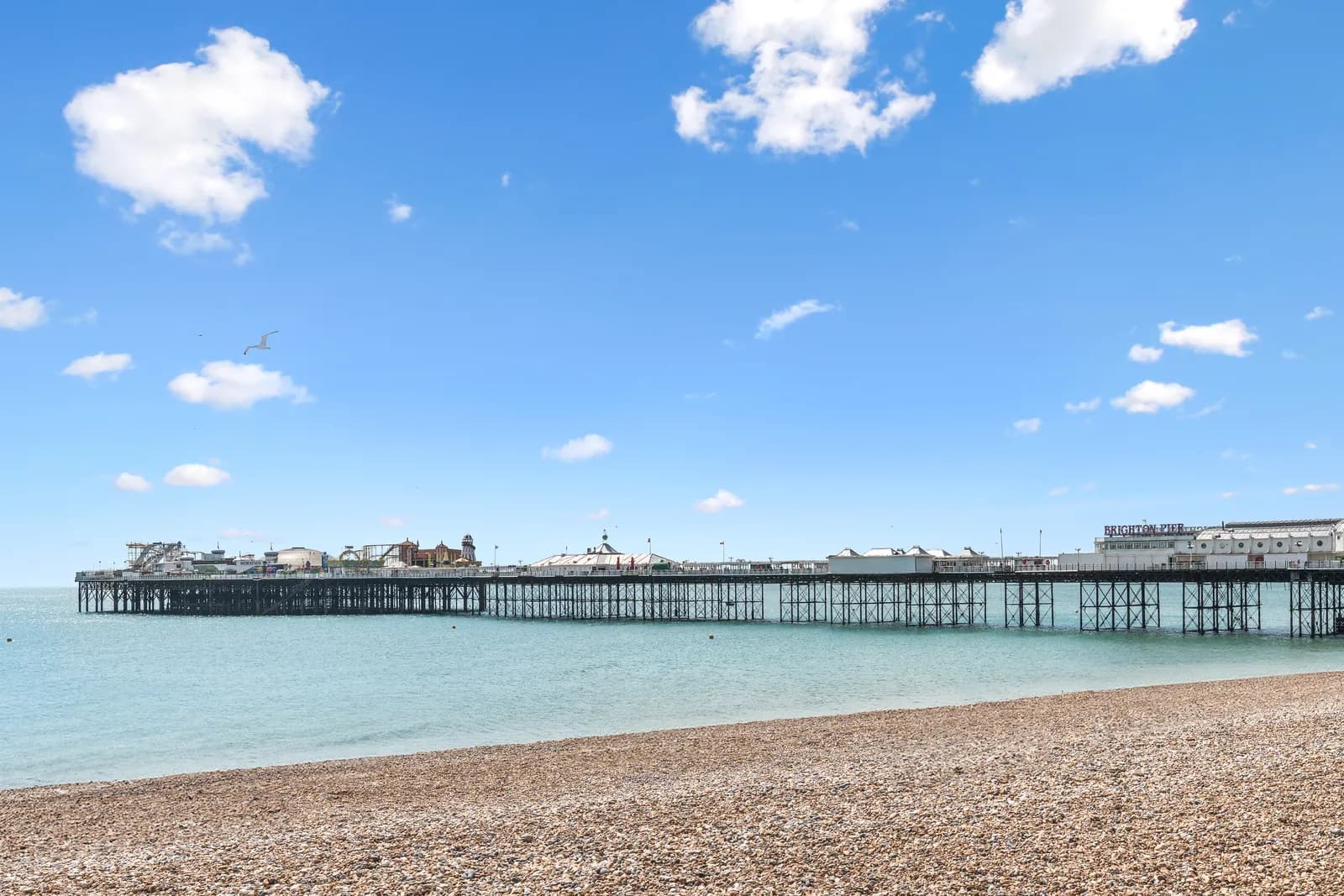
Brighton has more than one beach — and the differences matter. We rank the city's seven best beach stretches by pebble quality, crowds, swimming, food, and access. Local knowledge, no fluff.
Brighton has more than one beach. Locals know this; visitors often don't. The strip from Hove Lawns to Saltdean covers eight miles of coastline, with each stretch delivering a different experience — different crowds, different food, different pebble grades, even different swimming conditions. Get the choice right and your beach day is unforgettable. Get it wrong and you're paying £4 for a deck chair next to a stag party.
This is our ranked, named guide to Brighton's seven best beach stretches, written from years of local use rather than guidebook research. No fluff, no list-padding — just where locals actually go and why.
Quick comparison
Use this if you only have ten seconds. Each beach is rated for what it does best:
- Hove Lawns — Best for: families. Crowds: medium. Pebbles: smaller, walkable. Food: excellent cafes lining the promenade.
- Hove Deep Sea Anglers — Best for: peace. Crowds: low. Pebbles: large, dramatic. Food: bring your own.
- Brighton Central (Palace Pier to West Pier) — Best for: classic seaside vibe. Crowds: very high. Pebbles: medium. Food: every option, plus the i360.
- Kemp Town and Marina-side — Best for: locals' atmosphere. Crowds: medium. Pebbles: medium. Food: independent cafes and beach bars.
- Black Rock — Best for: space. Crowds: low. Pebbles: rougher. Food: limited — bring a picnic.
- Saltdean Beach — Best for: best beach near Brighton. Crowds: low to medium. Pebbles: mixed. Food: cafe at the historic Lido.
- Rottingdean Beach — Best for: scenery and village feel. Crowds: low. Pebbles: large. Food: village pubs and tearooms.
Now the detail. Skip to whichever stretch fits your day.
1. Hove Lawns
Vibe: Civilised. Calmer than central Brighton, with the wide grass strip behind the seafront giving families room to spread. Beach huts in pastel colours add postcard appeal.
Crowds: Medium even on hot Saturdays — busy, never overwhelming.
Pebbles: Smaller and more rounded than central Brighton. Easier on bare feet, comfortable to lie on.
Best for: Families with young children, anyone who wants a beach day without the central scrum.
Food nearby: Marrocco's (legendary ice cream since 1969), Rockwater for cocktails, The Hove Beach Box for casual food, plus a cluster of beachfront cafes along the promenade.
Walkable from station: Yes — five minutes from Hove Station; ten from Brighton Station.
Hove Lawns is where I send friends with kids. The grass behind the pebbles means you can pitch up properly: blanket, picnic, kids running around without dodging tourists. Public toilets at regular intervals (basic but functional). The water's calmer here than central Brighton because the prevailing wind hits Hove first and the larger pebbles further west slow the wave action. Lifeguards on duty in summer. Free outdoor gym equipment if that's your thing. The crucial bit: you can park on the residential streets just behind the seafront for free if you arrive before 9am. Otherwise, the King Alfred car park is your best bet.
2. Hove Deep Sea Anglers
Vibe: A locals' secret. Continue west of Hove Lawns past the King Alfred Leisure Centre and the beach widens, the crowds thin, and the noise fades.
Crowds: Low, even on bank holidays.
Pebbles: Bigger — fist-sized and dramatic. Bring a beach mat or padded chair.
Best for: Sea swimming, reading, anyone wanting peace within walking distance of the city.
Food nearby: Bring your own. The nearest cafe is a fifteen-minute walk back toward Hove Lawns.
Walkable from station: Hove Station is fifteen minutes' walk.
This is the stretch the swimming community uses. Sea swimmers gather here at dawn most days. Water is deeper closer to shore than at Hove Lawns, the wave action gentler, and you'll find Blue Flag water quality. No facilities means fewer day-trippers. Bring everything you need — water, sun cream, food, layers — and you'll have one of the calmest Brighton beach experiences possible. The walk back along the promenade at sunset, with the West Pier ruins and i360 silhouetted, is genuinely beautiful. Brighton at its most underrated.
3. Brighton Central (Palace Pier to West Pier)
Vibe: Iconic, electric, exhausting. This is the Brighton you've seen on postcards: Palace Pier stretching out, the West Pier ruins, the i360 viewing tower, hundreds of deck chairs, sound systems competing.
Crowds: Very high in summer. On August Saturdays the beach is essentially a carpet of people from late morning until evening.
Pebbles: Medium-grade. Workable but uncomfortable underfoot for long.
Best for: First-timers, anyone wanting the classic seaside-energy experience, people-watchers, evening drinks.
Food nearby: Every option imaginable. Fish and chips at multiple takeaways (quality varies — ask locals), beach bars beneath the Kings Road Arches, Fortune of War (the oldest seaside pub in Britain), Coppa Club's iconic seafront pods. Top-end seafood at The Salt Room or Riddle and Finns.
Walkable from station: Brighton Station is a brisk ten minutes downhill.
The classic stretch. Loud, busy, full of life. If you want the postcard Brighton experience, this is it. But manage expectations: in peak summer you'll queue for everything, including space on the pebbles. The trick is timing. Arrive before 10am or after 6pm and the same beach feels twice the size. Sunset here is genuinely magical — west-facing, with the West Pier ruins backlit. Pack your own drinks and snacks; beach prices are inflated. Volleyball courts near the pier host regular games — join in or watch.
4. Kemp Town and Marina-side
Vibe: Bohemian, lived-in. Walk east from the Palace Pier and the energy shifts — fewer tourists, more locals, independent cafes replacing chains.
Crowds: Medium. Manageable even in August.
Pebbles: Medium-grade. Some sections improved by recent shingle replenishment.
Best for: Anyone wanting Brighton character without Brighton chaos. Coffee crawlers. LGBTQ+ visitors — Kemp Town is the heart of Brighton's queer scene.
Food nearby: Kemp Town's St James's Street has independent cafes; the Marina has chains plus better cocktail bars; The Lanes are fifteen minutes' walk.
Walkable from station: Brighton Station is fifteen to twenty minutes walking — the bus is easier.
Kemp Town is where locals decamp when the central beach gets too much. The character is different — less stag-do, more queer-flag-bunting, more independents. Volk's Electric Railway (the world's oldest still-operating electric railway) runs along this stretch, which is a charm few tourists know about. The Marina has Brighton's only sandy patch — a small strip near the boardwalk if you really must have sand instead of pebbles.
5. Black Rock
Vibe: Sparse, dramatic, slightly wild.
Crowds: Low. Even on hot weekends you'll find space.
Pebbles: Rougher and bigger toward the cliff base. Less curated than central Brighton.
Best for: Space, dog walkers (some sections allow dogs year-round), photographers wanting the chalk cliffs in shot.
Food nearby: Limited. The Marina is the closest substantial option.
Walkable from station: Long walk from Brighton Station — drive or bus.
Black Rock is the transitional stretch between the Marina and Saltdean. Fewer facilities, almost no shade, but real space. The chalk cliffs rising behind the beach give photographs scale and drama. Tide watching matters here — at high tide, some sections become inaccessible. Check times. The Undercliff Path between the Marina and Rottingdean passes Black Rock and is one of Brighton's best coastal walks regardless of beach plans.
6. Saltdean Beach
Vibe: Edwardian seaside in 2026. Saltdean was built in the 1930s as a model resort and the architecture survives — most famously the Saltdean Lido, the Grade II-listed Art Deco swimming pool.
Crowds: Low to medium even in peak summer.
Pebbles: Mixed grade — pebbles plus exposed rock at low tide.
Best for: Visitors searching for the best beach near Brighton who want away from central crowds, families wanting the Lido option as backup.
Food nearby: Cafe at the Lido, The Saltdean Tavern, plus a couple of beach kiosks.
Walkable from station: Drive (15 minutes from central Brighton) or bus 12X (Brighton-Eastbourne route stops outside).
If you've searched for the best beach near Brighton and ended up here, this is your answer. Saltdean delivers the proper seaside-village experience — proper sand pockets at low tide, the magnificently restored Lido (open summer only, book ahead), fewer crowds, and architecture that's genuinely interesting. Pair a beach morning with a Lido afternoon for one of the best summer days the south coast offers. Free street parking is generally findable.
7. Rottingdean Beach
Vibe: Village-by-the-sea. The most charming of Brighton's outlying beaches.
Crowds: Low. The village character keeps it intimate.
Pebbles: Large and dramatic.
Best for: Scenery lovers, walkers, anyone wanting a half-day escape from central Brighton.
Food nearby: The Olde Black Horse and other village pubs, plus the Whyte House cafe and Bayboys.
Walkable from station: Drive or 12X bus from Brighton.
Rottingdean was Rudyard Kipling's home — his garden remains, accessible to visitors. The village pond, the windmill on the hill, and the chalk cliffs all sit within a few minutes' walk of the beach. The beach itself is small and pebbly but backed by genuine seaside-village character. The Undercliff walk between Rottingdean and the Marina (around 30 minutes each way) is one of the great Sussex coastal walks. This is where I send couples who've already done central Brighton and want something more romantic.
Swimming and water quality
Most Brighton beaches hold Blue Flag status, signalling regularly tested water quality. That said:
- Water temperature: typically 15-18°C in summer, peaking around 18°C in mid-September. Cold by Mediterranean standards. Bracing in May; comfortable from late June.
- Lifeguards: seasonal, on Hove Lawns and central Brighton stretches only. Other beaches are at-your-own-risk.
- Currents: generally manageable but can be strong near groynes and the piers. Strong swimmers only beyond designated areas.
- Tides: check times before swimming. Some sections (Black Rock, the Undercliff) become tricky at high tide.
The best summer swimming is usually early morning (calmer water, fewer people) or late afternoon. Swimming buoys mark designated areas at the central beach.
Parking and how to get there
Brighton in summer punishes drivers. The honest answer for visitors arriving by car: park once, then walk, bus, or take the Volk's Railway.
If you do drive, options are:
- Stay somewhere with parking — our Clarence Yard apartment in The Lanes includes free secure parking and is five minutes from the central beach. Park on arrival, leave the car for the trip.
- Park-and-ride — Withdean Stadium and Mill Road both run park-and-ride to the city centre on summer Saturdays.
- Train — Brighton Station is a ten-minute downhill walk to the central seafront. Hove Station is five minutes from Hove Lawns. Both run to London in about an hour.
Avoid central seafront car parks on weekends — they fill before 11am and charge premium rates.
Where to eat near each beach
Quick reference, beach by beach:
- Hove Lawns: Marrocco's for ice cream, Rockwater for cocktails, The Hove Beach Box for casual food.
- Central Brighton: The Salt Room (top-end seafood), Coppa Club (instagrammable pods), Fortune of War (history plus pints), beach bars under the Arches.
- Kemp Town: Petit Pois, Curry Leaf Cafe, The Wick.
- Marina: Carluccio's, The Crew Room.
- Saltdean: Cafe at the Lido, The Saltdean Tavern.
- Rottingdean: The Olde Black Horse, the Whyte House cafe, Bayboys.
Beach-front prices are always inflated; for value, walk one street back.
Where to stay
Your beach day is shaped more by accommodation than by the beach itself. Walking back to change, dropping off purchases, afternoon rests — you'll return to the apartment repeatedly. Proximity matters.
Our Clarence Yard apartment sits in The Lanes, five minutes' walk from the central beach. Lift access (no hauling beach gear up stairs), free secure parking, and walking distance to evening dining.
For a full list of Brighton properties — including options near Hove Lawns and Kemp Town if you want a quieter base — see all Brighton stays.
Frequently asked questions
Are there any sandy beaches in Brighton?
Strictly, no. Brighton's beaches are pebbles. The closest you'll find to sand is a small strip at Brighton Marina exposed at low tide, plus rocks at Saltdean. Pack a beach mat or padded chair and the pebbles become an advantage — they don't blow into your sandwiches or stick to wet children.
What is the best beach near Brighton?
Saltdean Beach for a proper seaside-village experience with the Lido, or Rottingdean for charm and walking. Both are 15 minutes from central Brighton by car or bus 12X.
Where is the quietest beach in Brighton?
Hove Deep Sea Anglers (west of Hove Lawns) on weekdays, or Black Rock (east of the Marina) any day. Both have low crowds and big pebbles.
Can you swim in Brighton?
Yes. Most beaches hold Blue Flag water-quality status. Lifeguards are stationed on Hove Lawns and central Brighton stretches in summer. Water temperature peaks around 18°C in September. Strong swimmers only beyond designated areas.
When is Brighton beach least crowded?
Early mornings (before 10am) and late afternoons (after 6pm) on any beach. Weekdays beat weekends. Hove and Saltdean are quieter than central Brighton year-round.
What should I bring to Brighton beach?
Beach mat or padded chair (essential on pebbles), water shoes, sun cream, layers (sea breezes cool quickly), cash (some vendors don't take cards), water, and a picnic. Skip valuables — petty theft happens.
Planning a beach trip? Check Clarence Yard availability — five minutes from the central seafront, with free parking included.
Featured Property
Interested in staying at the property mentioned in this article? Check availability and book your stay.
View Property

